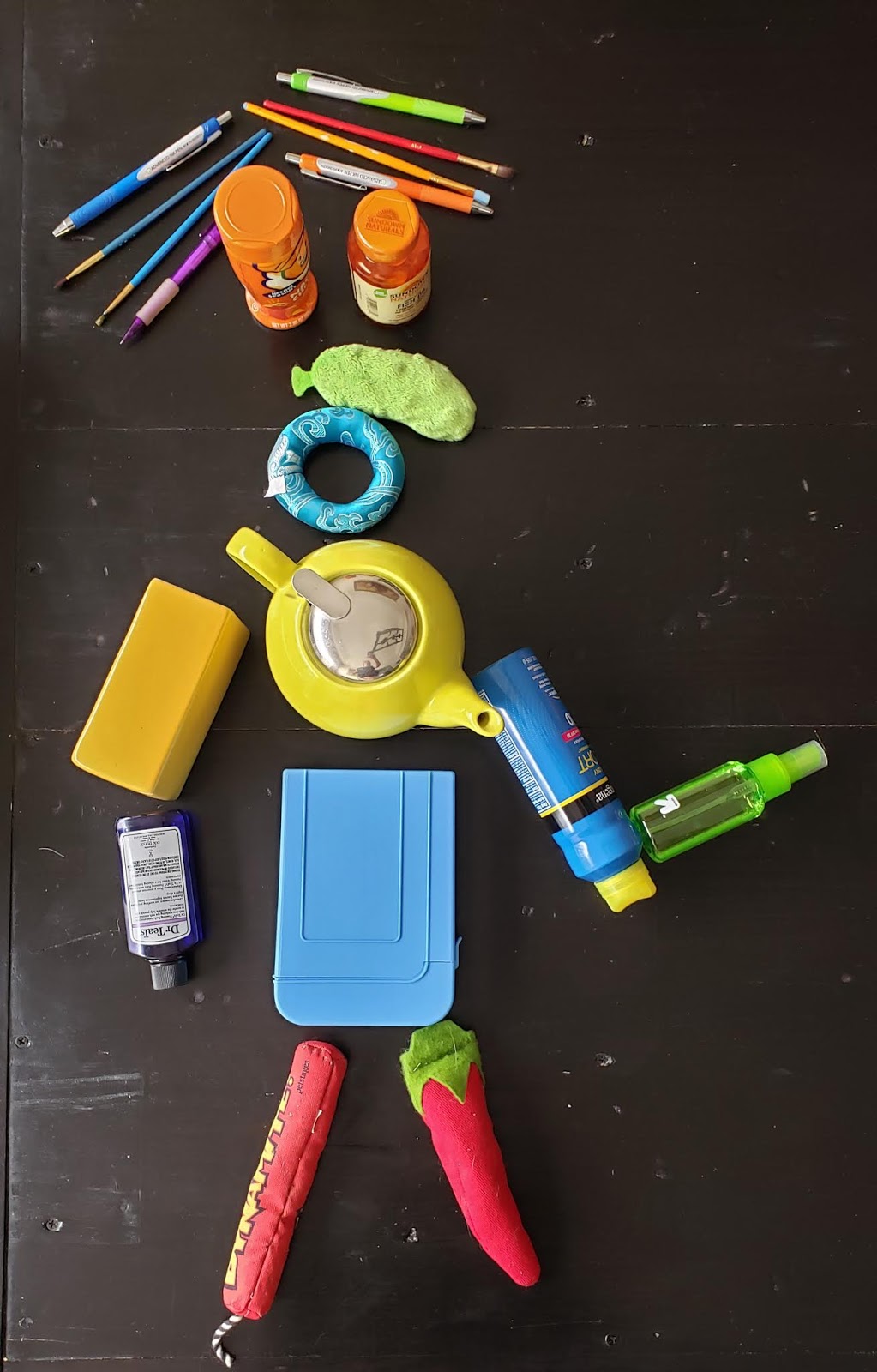
Level:middle school, but can be modified for almost any age
This Sculpture is for the Birds!
 In-The-Round Sculpture Using Available Resources
OBJECTIVES:
I will create one
recognizable sculpture in-the-round of a bird from an original 4-view drawing
using my available resources. My
sculpture may be lasting or impermanent, small or large
So that I understand how to work with limited resources
in order to accomplish a concrete goal
I will know I have it right when I have created a
sculpture of a bird using the resources that I have available to me, and it is
clearly recognizable to any viewer.
 REQUIREMENTS:
Students will:
1.
Brainstorm
2 ideas for your bird sculpture
(different positions or species).
2.
Choose
1 sketch and draw it from 4 different views: front, side,
back, and top. .
3.
Submit
sketches through EDSBY
4.
Re-create
the drawing in sculpture form
5.
Photograph
the sculptures from all 4 angles that were originally drawn
6.
Complete
the project in a timely manner
7.
Submit
pictures from all 4 angles that you drew to the teacher through EDSBY
8.
Clean
up
 TIME BUDGET:
7
working classes:
1 class- Sketch
2
classes- 4-View Drawings
4
classes- Sculpture
VOCABULARY:
Sculpture In-The-Round – sculpture that is meant to be viewed from all
angles
Consumable Resources –
Objects or materials that are meant to be used up and replaced (paints are
consumable resources, paint brushes are non-consumable)
Found Object – objects or products that are not
normally considered materials from which art is made often because they already have a non-art function.
Multi-View Drawing – A multi-view drawing is one that shows
two or more two-dimensional views of
a three-dimensional object. • Multi-view drawings provide the shape
description of an object. • When combined with dimensions, multi- view drawings serve as the main form of communication between
designers and manufacturers.
Sketch – a
quick or rough drawing an artist makes to express ideas that are intended to be
used in later works
Impermanent Art (also called temporary art) – art that is not
intended to be permanent or last a long time

MATERIALS:
· paper
· pencil
or pen
· Objects
from around the house and/or consumable art supplies
· Camera/camera
phone
· Computer
DIRECTIONS
1.
Read
the lesson plan thoroughly, including all vocabulary
2. Brainstorm:
Sketch out 2 ideas for your bird
sculpture (different positions or species). Think about your project- do you want to show
your bird flying, nesting, walking, floating, etc.? What type of bird do you want to show-
tropical, migrating, non-flying, common, exotic, etc.? Keep
in mind the materials you have
available to work with while you are brainstorming.
 |
| Even though this isn't a bird, it's a great example of a 4-view drawing! |
3. Choose 1 idea/sketch and draw it from 4 different views: front, side,back,
and top. Sketches must be to scale with
each other, and be drawn on the same page as each other. Your 4 drawings should take up the entire
page/ each sketch uses ¼ page. HINT: if you’re having a difficult time
with the 4-view drawing, look up images of wood carving patterns and bird decoy
patterns. Using these multi-view
drawings is standard when creating sculpture and wood carving, and images like
this are very common!
4. Submit sketches
through EDSBY
5. Collect,
with permission, materials from around the house to use for your
sculpture. If you are using consumable resources (paint, air-dry clay, foil,
paper, tape, wire, etc.), make sure you have a dedicated working area that can
be used for this purpose.
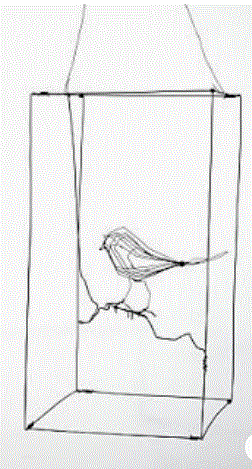
6. CAREFULLY
re-create the drawings in sculpture
form, checking each view for accuracy
according to your original drawings.
7. Photograph
the sculptures from different angles
8. Complete
the project in a timely manner
9. Submit pictures from
all 4 views that you drew to the teacher through EDSBY
10. Clean up
REFLECTION
QUESTIONS
for after assembling your bird sculpture
(to be completed as a survey in EDSBY):
1.
What surprised you when
making your sculpture?
2.
When
creating your sculpture, what was the easiest part for you?
3.
When
creating your sculpture, what was the most difficult part for you?
4.
Which
part of your sculpture do you think was the most successful and why?
5.
Which
part of your sculpture do you think was the least successful and why?
6.
If
you were to do this again, what would you do differently?
SUNSHINE STATE
STANDARDS
VA.68.C.2.1 Assess personal artwork during production to determine areas
of success and needed change for achieving self-directed or specified goals.
VA.5.O.1.2 Organize the
structural elements of art to achieve visual unity.
VA.5.F.1.1 Examine and experiment
with traditional uses of media to apply imaginative techniques in two- and/or
three- dimensional artworks
 RESOURCES: